State Parks .com
USA Washington Saddle Mountain National Wildlife Refuge

Facilities and Activities:
Day-UseHuntingyes


National Park Location Maps:
Local area map for Saddle Mountain National Wildlife Refuge location
(click here to zoom and navigate local map)

State of Washington map showing Saddle Mountain National Wildlife Refuge location
(click here to zoom and navigate regional map)


View TOPO Maps!

Get directions to this park:
Town and state
OR
zip code

Google™ Maps opens in a new window


National Park Photo Gallery:
   volunteer positions open


Nearby Parks:
 Columbia National Wildlife Refuge


National Park Contact Information:
Saddle Mountain National Wildlife Refuge
3250 Port of Benton Blvd.
Richland, Washington   99352
Adopt-A-Park Contacts:
Photography: add your photos
National Park Overview:
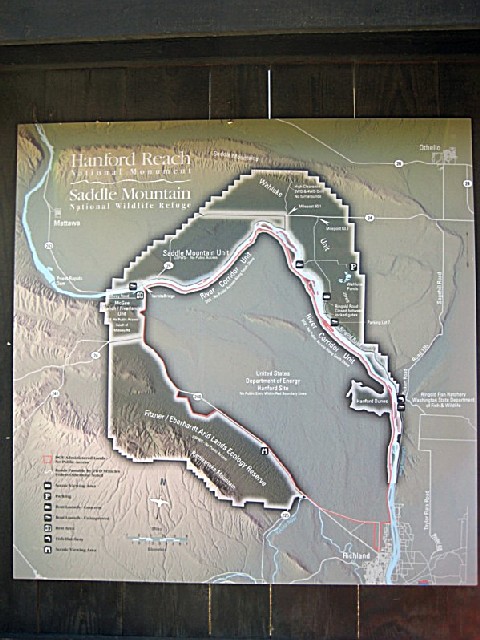
Saddle Mountain National Wildlife Refuge was established in 1953. The 195,000-acre Hanford Reach National Monument/Saddle Mountain National Wildlife Refuge was created when President Bill Clinton signed Proclamation 7319 on June 9, 2000. The Monument/Refuge is the first of its kind under U. S. Fish and Wildlife Service management within the lower 48 states and managed as a unit of the National Wildlife Refuge System.

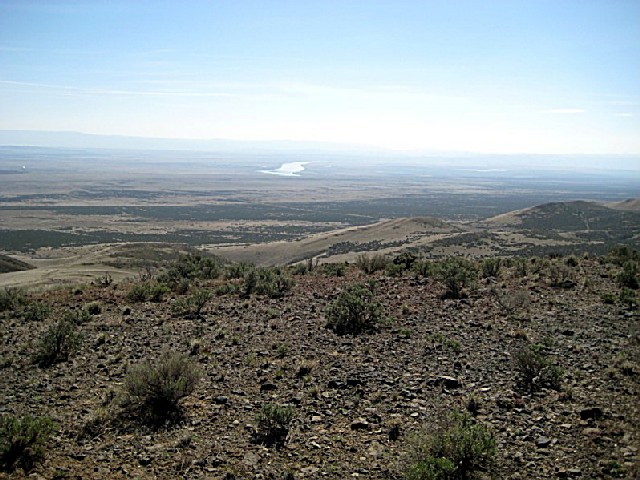
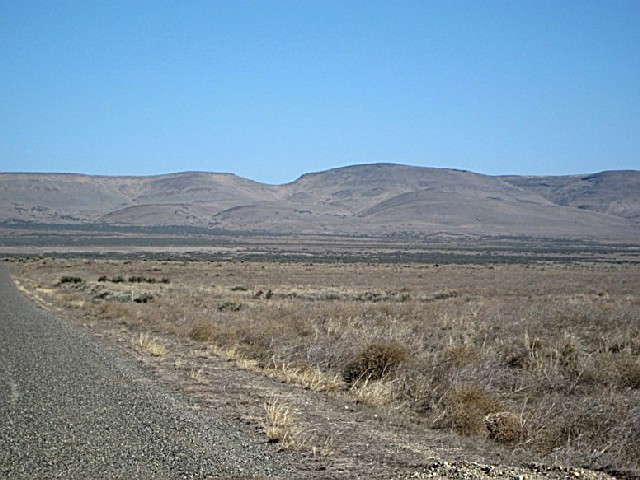
The Monument/Refuge is comprised of the Fitzner-Eberhardt Arid Lands Ecology Reserve and the Saddle Mountain and Wahluke Units. These units encompass important riparian, aquatic, riverine and upland shrub-steppe habitats that are declining throughout the American west.

Numerous wildlife species depend upon these intact ecosystems; 43 species of fish, including threatened and endangered salmon and trout; 40 mammals; 246 birds; 4 amphibians; 9 reptiles and over 1500 invertebrates.
Nature of the Area:
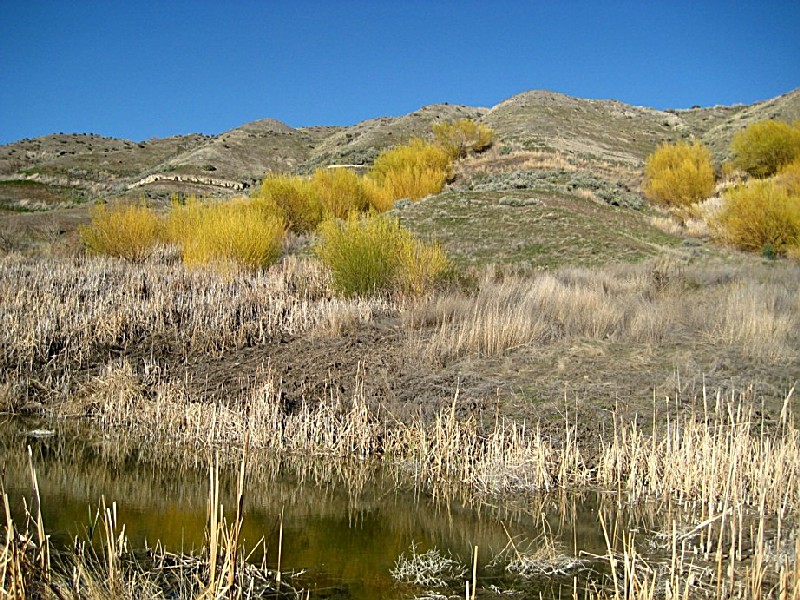
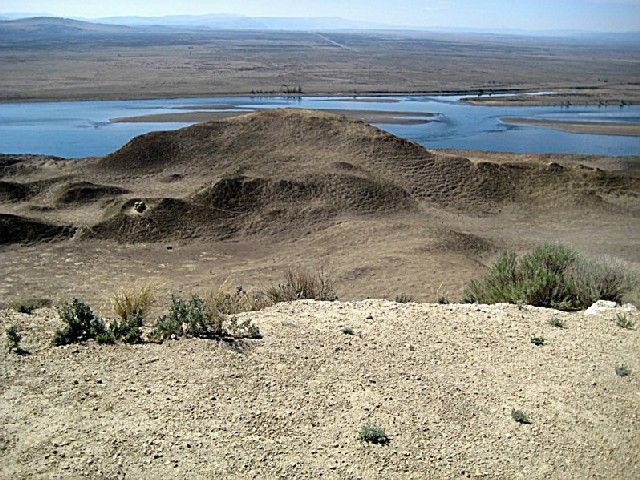
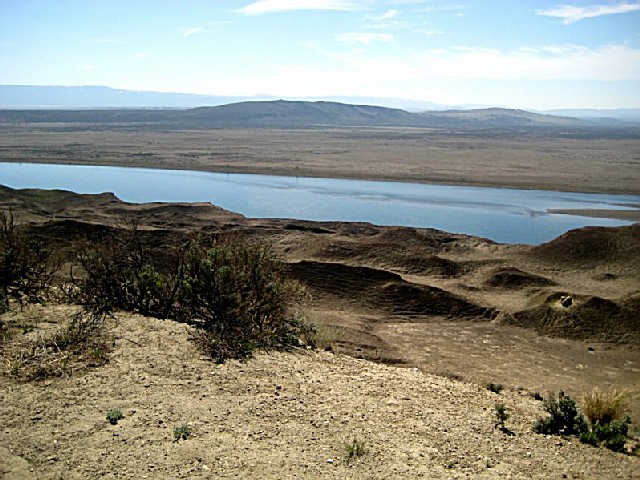
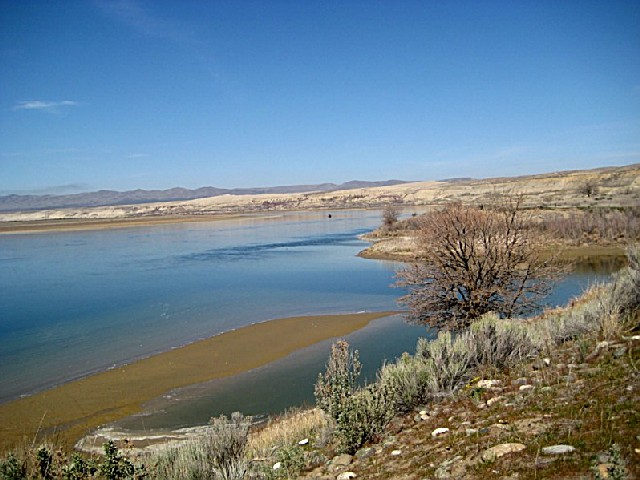
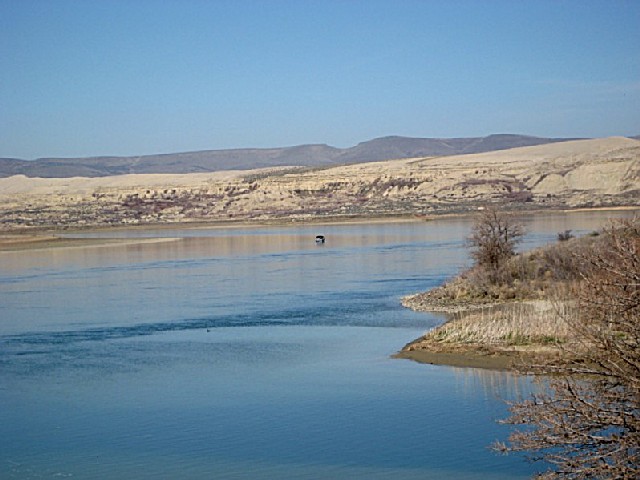
Hanford Reach National Monument/Saddle Mountain Refuge lies adjacent to approximately 18 miles of the last free-flowing stretch of the Columbia River east of Mattawa in eastern Washington's Grant County. This shrub-steppe region is characterized by low precipitation and seasonal temperature extremes.

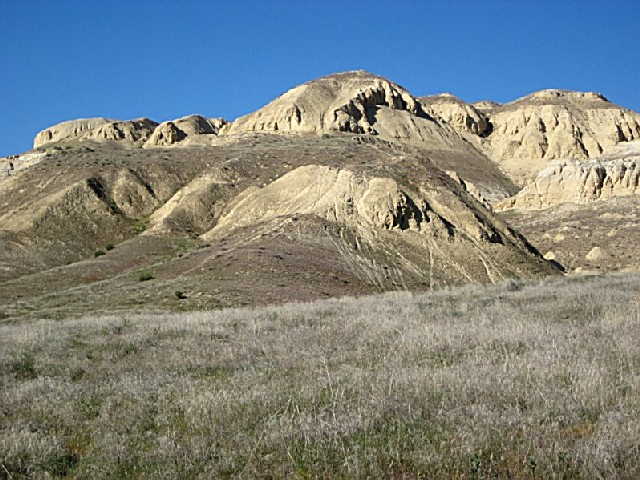
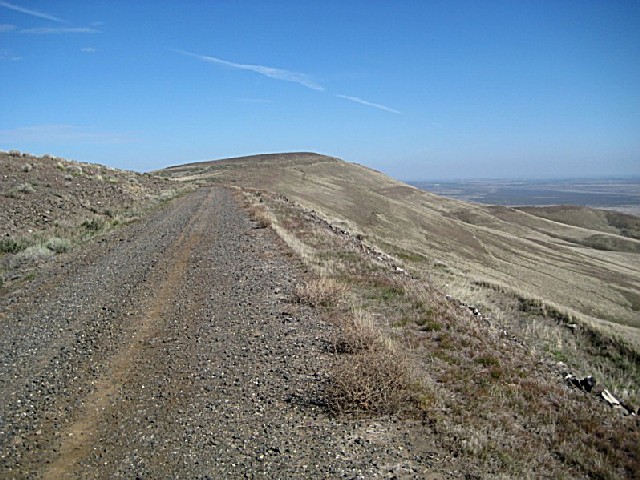
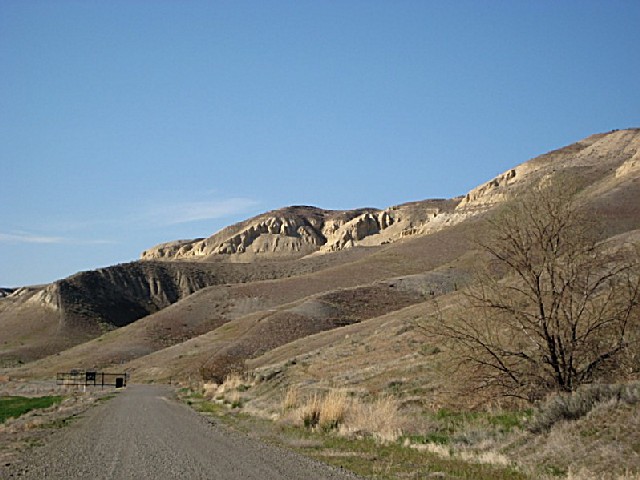
Dominant vegetation includes big sagebrush, Sandberg's bluegrass, cheatgrass, and gray rabbitbrush. One of only three cactus species native to the state, Opuntia polyacantha, is also present on the refuge. The refuge lies at an elevation below 900 feet and has very little vertical relief other than the noteworthy White Bluffs along the Columbia River. The refuge includes the Fitzner/Eberhardt Arid Lands Ecological Reserve and the former McNary Islands in the Columbia River.

Wildlife abounds in this harsh landscaperare is a trip along the river that doesn't produce mule deer, coyotes, bald eagles, great blue herons, or white pelicans. A large elk herd hides in the canyons, and incredibly, porcupines are a common sight. Rare plants defy the drought, wind and heat. Beautiful spring wildflower displays delight the visitor who venture into the field.
Reviews By Park Visitors:
visitor rating: (1 vote)   |Post Your Own Review

It acutally has a lot of potential

Saddle Mountain is a newer refuge. With time it could be quite nice. Its in a flyway and numerous rare species are or on near it.

Written by Mike Luzzo  29-Aug-2008

Fishing and Hunting:
Fishing:

The Hanford Reach offers 51 miles of free-flowing Columbia River, the last in the United States. It maintains a world-class fishery, enjoyed by anglers year round. Trophy bass can be found in the side channels and along rocky shorelines. Fall chinook salmon, termed "Upriver Brights" return to the Reach every year by the thousands to spawn in the gravel beds. Steelhead are also found in the river's cold, clear water and can provide anglers with the fight of a lifetime; however, all wild steelhead must be released unharmed. In the deep holes of the Columbia, the ancient white sturgeon gives anglers an opportunity to harvest this unique species.

Most fishing is generally done from a motor boat, with shallow draft jet boats being the most popular. A float trip by kayak, raft, or canoe will provide a chance to fish the upper Reach. Though less productive, bank fishing is also possible with bass being the best quarry.

Fishing seasons and limits are set by Washington Department of Fish and Wildlife. Be sure to review the regulations which are published annually. Make your trip to Hanford Reach memorable with a trophy fish for your wall or dinner table.

Hunting:

Visitors to the Monument in fall and winter can enjoy a variety of hunting experiences in the riparian and shrub-steppe habitats. Upland hunters will find chukar and California quail challenging in the tall sagebrush. Waterfowl are abundant on both the Columbia River and the White Bluffs Ponds on the Wahluke Unit. Big game hunters can find opportunities to harvest mule deer and Rocky Mountain elk.

All seasons are set by Washington State Department of Fish and Wildlife. Be sure to read the free state hunting regulations published annually. Special restrictions apply while hunting Monument lands, including restrictions on modern firearms and non-toxic shot. Shotguns, muzzleloaders, and archery are allowed.
History of the Area:
For thousands of years people have depended on the Hanford Reach of the Columbia River, or "Chiawana" (Big River), to survive in the desert environs of the Columbia Basin. As early as 8,000 years ago, the ancestral inhabitants of today's Wanapum People, Yakama Nation, Confederated Tribes of the Colville, Confederated Tribes of the Umatilla Reservation and the Nez Perce fished, hunted and collected a variety of natural resources in the area. The abundant salmon were complimented by upland roots, seeds and game.

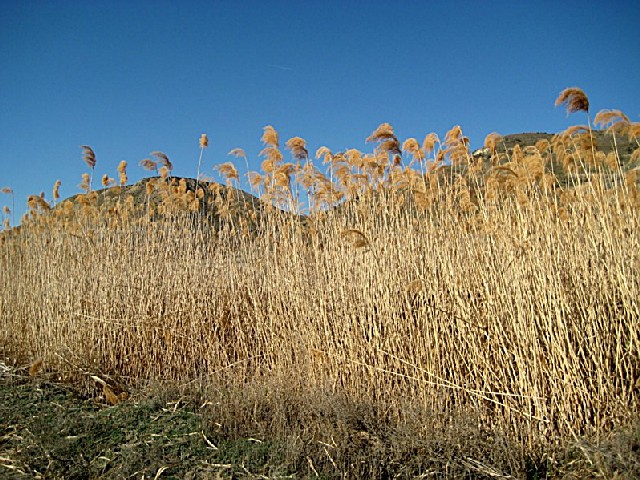
Seasonal gathering of resources such as spring roots or fall Chinook salmon required moving 'camps' often. Tule (bulrush) mats were draped over willow poles for temporary shelter. In winter, shallow oval pits were dug and poles covered with tule, willow or hides for more permanent 'housepit' villages along the Reach. Even today, Native Americans gather the tules for making house coverings, sleeping mats and other household uses.

Several thousand Native Americans still occupied the basin when Lewis and Clark passed just south of the Reach in 1805.

Advertise your park related business
   on stateparks.com
...vacation cabin, weekend getaway, log cabin rental, romantic cottage, vacation home, resort, hotel, motel, bed and breakfast, country inn, campground, RV park, horseback riding stable, canoe livery, river rafting, outfitting, sporting goods store, guide service, RV rental, etc
     read more....
Related Links:
Hanford Reach National Monument - Hanford Reach National Monument/Saddle Mountain National Wildlife Refuge ... Welcome to the Hanford Reach National Monument?the U.S. Fish and Wildlife Service's only national monument. Protected by ...
Bird Checklists of the United States - ... WA (Updated 08/95) Columbia National Wildlife Refuge -- Othello, WA Saddle Mountain National Wildlife Refuge -- WA Conboy Lake National Wildlife Refuge -- Glenwood, WA Dungeness National Wildlife ...
Hanford Reach: Save the Reach Homepage - ... of this area is managed by the U.S. Fish and Wildlife Service as the Saddle Mountain National Wildlife Refuge and the other half by the Washington State Department of Fish and Wildlife as the ...
Hanford Reach gets Clinton's protection - ... that 57,000 key acres along the Reach be managed as part of the existing Saddle Mountain National Wildlife Refuge. The president's declaration triples the size of the refuge, which is now 30,000 ...
Second option good move - ... balked, Clinton instead ordered that the area become part of the existing Saddle Mountain National Wildlife Refuge, in effect tripling the size of the refuge. Clinton cited the U.S. Pacific Salmon ...
Summary of the Hanford Site Environmental Report 1998: Overview of the Hanford Site and it - ... U.S. Fish and Wildlife Service Saddle Mountain National Wildlife Refuge (approximately 130 square kilometers [50 square ... area and the Saddle Mountain National Wildlife Refuge would be combined ...
Directions:
To reach the Monument Headquarters, follow I-182 in central Washington toward Richland. Take the George Washington Way exit into Richland, and follow this for several miles through the city. Just after the Richland High School and Washington State University Tri-Cities campus on the left, visitors will go up a small hill.

The next traffic light is Battelle Boulevard. Take the next right (5th Street) after Battelle Boulevard. At the next intersection, the Monument headquarters will be just across the street and to the left, 3250 Port of Benton Boulevard.

Please note that most of this new monument is closed, or access is limited, and there are few visitor facilities pending completion of a management plan and its implementation.

The Monument is within a half day drive of three major metropolitan areas (Seattle, Spokane, and Portland) and situated in the "backyard" of the Tri-Cities (Richland, Kennewick, Pasco), Washington, with a population of more than 150,000.
USA Washington Saddle Mountain National Wildlife Refuge
Visit Rainier Advertise on StateParks.com
    American Dreams Inc. - Logan, Ohio    www.stateparks.com