WARD CHARCOAL OVENS STATE PARK
WARD CHARCOAL OVENS STATE PARK
Outstanding geologic features are located in and around the park. Just south of the charcoal ovens are 250-430' high remnants of Tertiary volcanic tuffs and quarts latite tuff, used in the building of the charcoal ovens. This material was deposited during widespread eruptions from volcanic vents south of White Pine County. The tuff contains visible crystals of honey-yellow sphene.
Snowcapped mountains in the distanceWillow Creek, just north of the ovens, is fed by spring clusters in the mountains to the west. This perennial stream provides plentiful fish habitat. At one time, a small reservoir was built on Willow Creek and was a favorite fishing spot for local residents. The earthen dam was found to be unstable, and was destroyed in 1972.
The vegetation communities found in the park include sagebrush and grasses at the lower elevations, and pinyon-juniper woodlands at the higher elevations. Along Willow Creek, abundant riparian vegetation is characterized by lush meadows including wildrose, willows and wildflowers.
Within the park, a diverse wildlife population is supported by the variety of plant communities, abundant cover and remote location. Among the animals found here are badgers, jack rabbits, coyotes, magpies, larks, mule deer, ravens and a variety of reptiles and amphibians.
Thomas Ward discovered The Ward Mining District, located north of the park, in 1872. The mines of the Ward District were controlled mainly by the Martin White Company of San Francisco. The most famous was the Paymaster mine, which became the leading producer in White Pine County during the boom years of Ward.
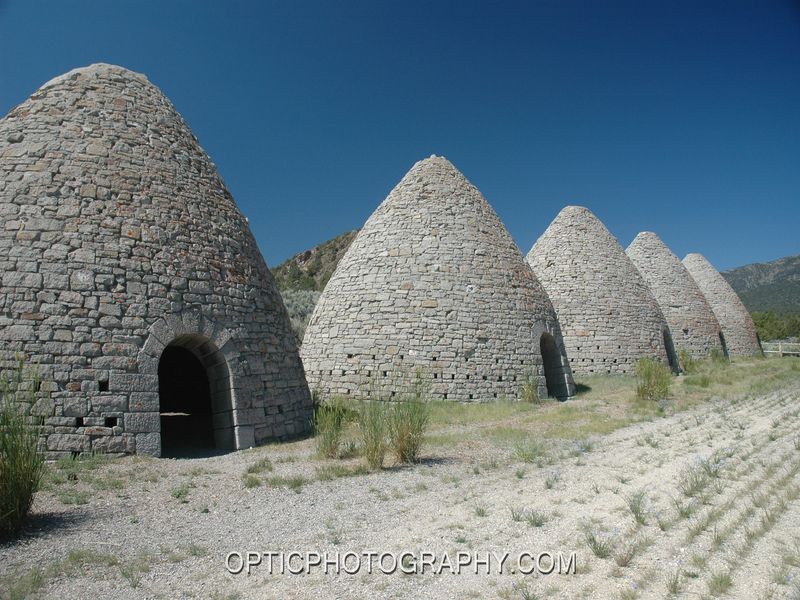
Early silver production brought the need to produce charcoal for use in the smelters which processed the ore. Near Willow Creek, six charcoal ovens were built in 1873 to produce charcoal to fuel the smelters. The ovens were built by Swiss-Italian charcoal workers called "Carbonari" and were made from Quartz latite welded tuff quarried near the ovens. The beehive shaped ovens were designed as a replacement for the open-pit system that originated in Italy, because they were a more efficient way to reduce pinyon and juniper into useable fuel.
Vents on the bottom of the kiln allowed for fine adjustment of temperature, and the parabolic (beehive) shape reflected heat back into the center. The Charcoal ovens produced about 30 bushels of charcoal per cord of wood. All wood types were used in the ovens, including pinyon pine, juniper, oak and aspen. The problem with the ovens was their permanence. Wood had to be transported to them. As wood sources near the ovens were depleted the cost of transportation overshadowed the worth of the yield.
The ovens are 30' high and 27' in diameter at the base. The walls are 20" thick with 3 rows of vents around the base used to control drafts. It took 13 days to fill, burn and empty a 35-cord kiln. Wood was loaded through the back doors where the ovens were banked against higher ground.
Eventually, charcoal ovens were phased out by the discovery of coal, by depleted ore deposits, and by the shortage of available timber. Historians disagree about how long the Ward Charcoal Ovens were in use but is most likely that they were used until the Martin White smelter shut down in 1879.
The Ward Charcoal Ovens served diverse purposes after their function as charcoal ovens ended. They sheltered stockmen and prospectors during foul weather, and had a reputation as the hideout for stagecoach bandits.
Today, the ovens continue to represent a unique and fascinating chapter in Nevada mining history. The Nevada Division of State Parks takes pride in their continued interpretation and preservation for future generations to enjoy.
Rustic Yurt Camping: Ward Charcoal Ovens is the only State Park in Nevada to provide a Yurt for a most unique camping experience. A Yurt is a Mongolian style round tent with a wood lattice frame and plywood floor. Our Yurt is located in a remote area of the park accessible by ATV-OHV, mountain bike or foot. The views of the surrounding mountains are breath taking. Reservations are required.
Willow Creek Campground is a 14-site campground with two large pull-through sites, one handicapped designated site and two vault type restrooms centrally located. Potable drinking water is available May through September from one hydrant located near the campground entrance.



 My wife and I camped in the area three years ago on our adventure to the east coast in our 95 chevy astro van. Our sleeping tent on wheels. It was early into our trip about two days out from los angeles. The camp was deserted but for a late arrival early leaver. We enjoyed the quite. But our siteseeing of the kilns was just amazing. Such craftsmanship. the rock was so well placed and the craftsmanship so superb. My wife and I were so pleased that we took the road to the camp. What great men lived in our past. I highly recomend to all that they should visit the Kilns if not camping. don and katy h.


 Share Your Ward Charcoal Ovens State Park Photos (click here)